


The BMW 7 Series has long stood as the high-water mark for what a luxury vehicle can and should be. It is not just a car; it is a rolling statement of intent from one of the world’s most storied manufacturers. When you step into the world of this flagship sedan, you are entering a space where the boundaries between high-end lounge comfort and hair-raising performance start to blur. For decades, it has been the choice for those who want the prestige of a chauffeur-driven limousine but still feel the itch to grab the steering wheel themselves on a winding weekend road.

Modern iterations of the BMW 7 Series have taken this duality to an entirely new level. We are no longer talking about just leather seats and a smooth ride. Today’s model is a tech powerhouse, draped in materials that feel like they belong in a boutique hotel in Milan. It represents a bold shift in design philosophy, moving away from the understated lines of the past toward a “monolithic” and commanding presence that demands attention on the road. Whether it is the glow of the massive kidney grille or the whisper-quiet operation of its electrified powertrains, this vehicle is designed to be the center of the universe for anyone lucky enough to be inside it.
The Evolution of an Automotive Icon
To truly appreciate where the BMW 7 Series is today, we have to look back at where it started. Since its debut in the late seventies, this model has been the “rolling laboratory” for the brand. Features we take for granted today—like anti-lock brakes, electronic parking sensors, and even integrated navigation systems—often made their brand debut right here. Each generation has pushed the envelope, moving from the classic, shark-nosed aesthetics of the E23 to the tech-heavy, digital-first powerhouse we see in showrooms today.
The transition over the years has been fascinating to watch. There was a time when the “Seven” was the subtle alternative to the flashy rivals of the era. However, as the market evolved, so did the BMW 7 Series. It grew larger, more opulent, and significantly smarter. The current generation represents the most radical departure yet, embracing a bold, split-headlight design and an interior that replaces traditional buttons with glowing glass “interaction bars.” It is a testament to the brand’s willingness to disrupt itself to stay ahead of the curve.
Mastering the Art of Performance
When people think of a full-size luxury sedan, they often prioritize comfort over speed, but the BMW 7 Series refuses to compromise on either. Under the hood, you’ll find a range of engines that feel less like machinery and more like a well-tuned orchestra. From the silk-smooth turbocharged inline-six to the thunderous TwinPower Turbo V8, the power delivery is relentless yet refined. It is the kind of power that doesn’t scream; it simply whisks you toward the horizon with a deceptive lack of effort.
What makes the driving experience so unique is the way the car hides its massive size. Thanks to advanced chassis technology like integral active steering and active roll stabilization, the BMW 7 Series handles more like a nimble sport sedan than a two-ton luxury cruiser. The suspension system reads the road ahead, adjusting the dampers in milliseconds to ensure that even the harshest potholes feel like mere ripples in a pond. It’s this “magic carpet” ride, paired with genuine “Ultimate Driving Machine” DNA, that sets it apart from every other executive car on the market.
A Cabin That Redefines Opulence
Entering the BMW 7 Series is less like getting into a car and more like entering a high-tech sanctuary. The brand has moved beyond the “standard” luxury tropes of wood and leather. While those are certainly available, you can now opt for cashmere wool upholstery—a touch that feels incredibly modern and cozy. The attention to detail is staggering; every surface you touch, from the crystal-glass iDrive controller to the open-pore wood trim, feels substantial and expensive.
The real showstopper, however, is the rear-seat experience. If you opt for the Executive Lounge package, the back of the BMW 7 Series becomes a private cinema. A massive 31-inch Theater Screen with 8K resolution drops from the ceiling, allowing passengers to stream their favorite movies or join video calls via a 5G connection. With the seats reclined and the footrest extended, the outside world simply disappears. It is an environment designed for those who value their time and privacy above all else.
“The BMW 7 Series isn’t just about getting from point A to point B; it’s about the transformation that happens to the person sitting inside during the journey.” — Automotive Design Journal
Engineering the Future: The Electric Shift
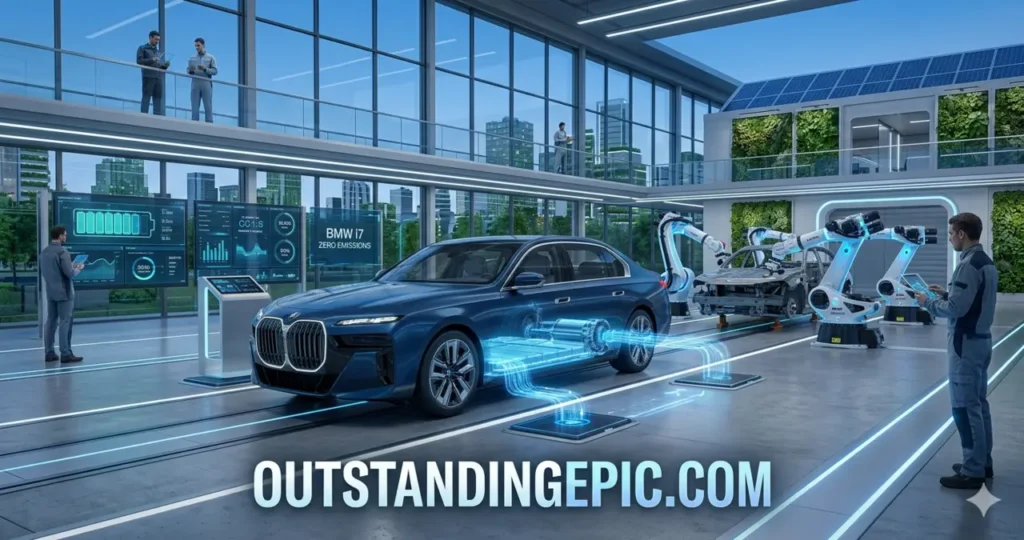
In a world moving toward sustainability, the BMW 7 Series has pivoted without losing its soul. The introduction of fully electric and plug-in hybrid variants has proven that luxury doesn’t have to be loud or thirsty for fuel. These electrified models offer a level of serenity that even the best gasoline engines can’t match. The near-silent acceleration provides a sense of calm that perfectly complements the car’s luxurious mission.
BMW has integrated the batteries and electric motors so seamlessly that you don’t lose any of the trunk space or interior room that makes the BMW 7 Series so practical. The instant torque from the electric motors provides a “shove” that feels almost effortless, making merging into highway traffic a zen-like experience. By offering these diverse powertrains, the brand ensures that whether you’re a traditionalist who loves the growl of a V8 or a tech-enthusiast looking for a zero-emission future, there is a “Seven” built specifically for you.
BMW 7 Series Comparison: At a Glance
| Feature | 740i (Inline-6) | 760i (V8) | 750e (PHEV) |
| Horsepower | 375 hp | 536 hp | 483 hp (Combined) |
| 0–60 MPH | ~5.2 Seconds | ~4.1 Seconds | ~4.6 Seconds |
| Drivetrain | RWD or xDrive | Standard xDrive | Standard xDrive |
| Fuel Type | Gasoline (Mild Hybrid) | Gasoline (Mild Hybrid) | Plug-in Hybrid |
Design Language: Bold and Unapologetic
The exterior design of the modern BMW 7 Series has sparked a lot of conversation, and that’s exactly what the designers intended. It features a massive, upright kidney grille that can be illuminated at night, creating a signature “light graphic” that is recognizable from blocks away. The split-headlight design, with the daytime running lights sitting above the main high-beams, gives the car a futuristic, almost robotic gaze.
Every line on the BMW 7 Series serves a purpose. The long wheelbase provides the car with majestic proportions, while the flush-mounted door handles and clean body panels improve aerodynamics. It doesn’t try to blend in; it stands tall with a presence that rivals ultra-luxury marques. For those who want something even more unique, the BMW Individual program offers two-tone paint jobs that are applied with the same precision as a fine piece of art, taking over seventy hours to complete.
Safety and Autonomous Innovation
Beyond the leather and the horsepower, the BMW 7 Series is a fortress of safety. It utilizes a suite of sensors, cameras, and radar that provide a 360-degree “digital shield” around the vehicle. Features like the Highway Assistant allow for hands-free driving on compatible roads at speeds that would make long road trips a breeze. The car doesn’t just watch the road; it watches the driver, ensuring you stay attentive while it handles the heavy lifting of stop-and-go traffic.
The parking technology is equally impressive. You can actually step out of the BMW 7 Series and use your smartphone to “remote control” the car into a tight garage or parking spot. It remembers the last fifty meters you drove and can automatically reverse out of a tricky driveway exactly the way you came in. It is this level of thoughtful engineering that transforms technology from a gimmick into a genuine utility for the owner.
Frequently Asked Questions
What is the starting price of the new BMW 7 Series?
The entry point for this luxury sedan usually starts around the ninety-nine thousand mark, though fully optioned V8 or electric models can easily climb well above one hundred and thirty thousand depending on the customizations.
Does the BMW 7 Series have all-wheel drive?
Yes, while the base model often comes with traditional rear-wheel drive, the xDrive all-wheel-drive system is available across the lineup and comes standard on the higher-performance V8 and hybrid variants.
How big is the Theater Screen in the back?
The optional rear entertainment system features a stunning 31-inch ultra-wide display. It features 8K resolution and works with built-in streaming services to provide a cinema-like experience on the go.
Is there a fully electric version of the 7 Series?
While the gasoline models are iconic, BMW also offers the i7, which is the fully electric counterpart. It shares the same chassis and luxury features but replaces the engine with a high-capacity battery and electric motors.
Final Thoughts on the Ultimate Flagship
The BMW 7 Series remains the definitive choice for anyone who refuses to settle. It is a vehicle that manages to be many things at once: a high-performance athlete, a technological marvel, and a serene sanctuary. While other cars might excel in one specific area, the “Seven” excels in all of them. It is a masterclass in German engineering, proving that even in an era of rapid change, the classic luxury sedan still has a very bright—and very fast—future ahead of it. Whether you are behind the wheel or reclining in the back, the experience is nothing short of extraordinary.
Latest Insights for You: OutstandingEpic

OutstandingEpic Editorial Team is an independent digital publishing unit focused on delivering high-quality, insight-driven content across technology, business, health, gaming, sports, and home improvement.
Rather than following generic reporting, the team combines data-backed research, market observations, and real-world analysis to break down complex topics into practical, easy-to-understand insights. From emerging crypto trends and digital innovations to everyday lifestyle improvements, every piece of content is crafted with clarity, accuracy, and reader value in mind.
The team’s approach is centered on relevance and usability—ensuring that readers not only stay informed but also gain actionable knowledge they can apply in real scenarios. By continuously tracking industry shifts and evolving online trends, OutstandingEpic Editorial Team maintains a consistent standard of trustworthy and up-to-date content.
Expertise: Data-Driven Insights, Crypto & Market Trends, Digital Strategy, Tech & Innovation
Coverage: Technology, Business, Health, Gaming, Sports, Home Improvement
Approach: Research-Based, Practical, and User-Focused Content
Updated: April 2026